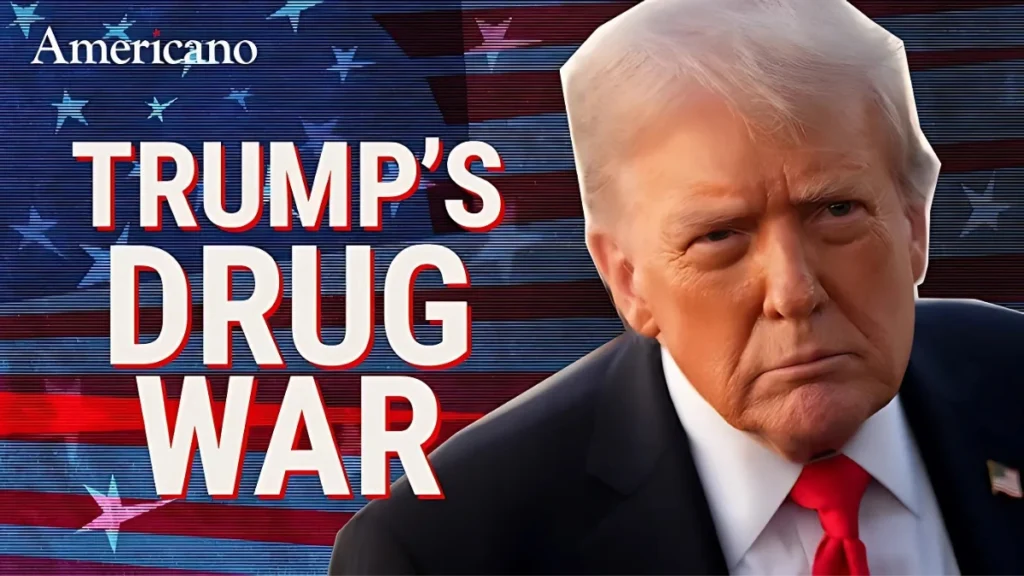
Inside Trump War: Former President Donald Trump has escalated the fight against Latin American drug cartels, launching a campaign that blends military strategy with law enforcement. Commentator Ben Domenech has highlighted how Trump’s approach goes beyond traditional border security, shifting into aggressive tactics designed to disrupt cartels at their source. From naval strikes to terrorist designations, Trump’s war on the cartels is redefining U.S. policy — and sparking heated debate.
Military Strikes at Sea
One of the most visible moves has been the use of direct military force against suspected drug boats. In recent weeks, U.S. naval vessels carried out missile strikes on Venezuelan ships allegedly linked to drug trafficking, leaving cartel operatives dead and cargo destroyed. These “kinetic strikes” mark a dramatic shift from interception and arrests to battlefield-style operations, signaling that the U.S. is willing to use lethal force to cut off supply lines before they reach American shores.

Labeling Cartels as Terrorist Organizations
The Trump administration has also pushed to classify major cartels as Foreign Terrorist Organizations (FTOs). This label allows the U.S. to apply broader legal tools — including sanctions, asset freezes, and expanded military options — to dismantle their networks. Supporters say this step is overdue, treating cartels with the seriousness they deserve. Critics warn it could complicate diplomacy with countries like Mexico and raise questions about sovereignty.
Mexico Under Pressure
A key element of Trump’s plan involves putting more pressure on Mexico’s government. The U.S. has made clear that if Mexico does not act decisively against the cartels, America may take unilateral action. This strategy has already increased tension with Mexican leaders, who face domestic political pressure and the risk of appearing weak in the face of U.S. demands. Cooperation will be critical, but conflict is a real possibility.
Intelligence and Surveillance Expansion
Alongside strikes and political pressure, the U.S. is modernizing its intelligence and surveillance operations. Drones, spy planes, and advanced monitoring tools are being deployed to track cartel leaders, labs, and trafficking routes. This focus on real-time intelligence is designed to make U.S. strikes more precise, but it also raises concerns about accountability and civilian safety in targeted regions.
Risks and Consequences
Trump’s war on the cartels carries significant risks. History shows that taking out cartel leaders or drug shipments can create a “Hydra effect” — new leaders and factions quickly replace the old. There are also serious questions about legality, as using military force in foreign waters or on land could trigger international disputes. Venezuela has already condemned U.S. actions, while critics at home argue Congress should have more oversight before military power is expanded further.

Conclusion: Ben Domenech’s analysis makes one thing clear: Trump’s war on the cartels is not business as usual. By combining military force, terrorist designations, and diplomatic pressure, the U.S. is signaling that it will no longer tolerate cartel dominance in Latin America. Supporters view it as long-overdue strength, while opponents warn of escalation and unintended consequences. What happens next could reshape both U.S. foreign policy and America’s decades-long war on drugs.
Disclaimer: This article is based on current reports and commentary. It is for informational purposes only and should not be taken as legal, political, or security advice.

Read More: